Multnomah Falls & Mt. Hood
📍 Multnomah Falls to Mt. Hood, OR
Good evening from the beyootiful Pacific Northwest. The following photos will tell you why.
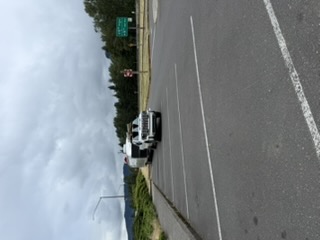
We did a little research to get a parking pass for Multnomah Falls. I used to live in Portland, OR, so I have been there at least a few times. But Keith has never been to see them. We thought we could go the morning we left the KOA but the parking passes were for 0900–1200. You know Keith will not just hang around four hours! But, if you read down to the bottom of the reservation information, you could see that arrivals before 0900 would not be needed. So, we took a chance and, when we arrived at the parking lot, we had a lot of space to pull our rig in.
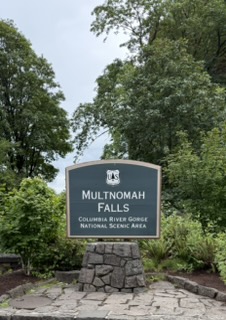
After parking, you walk under the highway and under the railroad tracks.
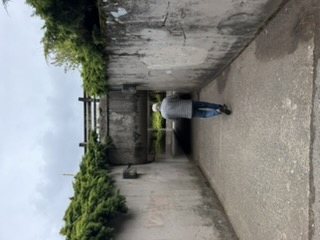
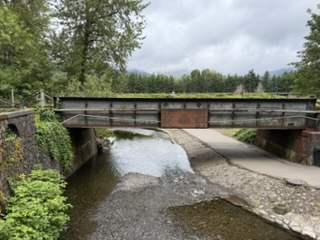
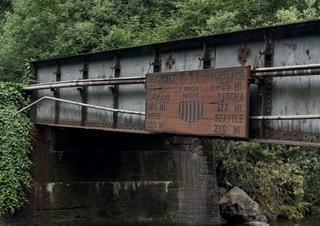
As soon as you come out from under the tunnel, you turn right and, there they are!
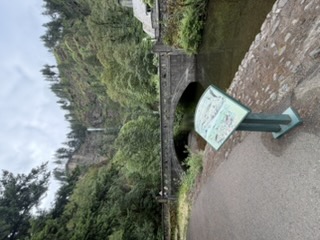
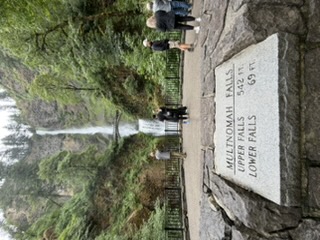
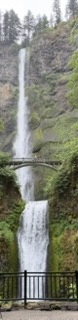
The Columbia River Gorge National Scenic Area is here today because of the overwhelming desire to preserve the beauty of the Gorge and its natural habitats. Multnomah Falls receives over two million visitors each year. It is the second highest year-round waterfall in the United States and one of 77 on the Oregon side of the Columbia River Gorge. Multnomah Creek, created by underground springs from Larch Mountain, feeds the falls as it plunges off steep basalt cliffs. The water flow varies, but is most spectacular in the winter and spring when at its fullest — the falls plummet 543 feet to the upper plunge pool, descend another 69 feet, plus an additional 8 feet in between to total a 620-foot fall! Since the 1880s people have looked for a way to escape the bustle of the city. Trains and steamboats with tourists navigate up and down the gorge.
Once in the stream habitat, plastic and food containers can absorb additional toxins that do not dissolve in water. Animals can ingest these poisons, or become entangled in garbage, leading to suffocation and starvation. Once in the stream, plastic garbage will last more than a lifetime.
What can a visitor do? This is what is posted:
- If you see salmon in streams, walk slowly or sit quietly to avoid disturbing fish while spawning
- Hike on designated trails to protect stream habitats from erosion
- Use trash cans where available, otherwise, pack out your trash for disposal
- Keep dogs leashed at all times to avoid disturbing or injuring wildlife
- Pick up after your pets and dispose waste properly
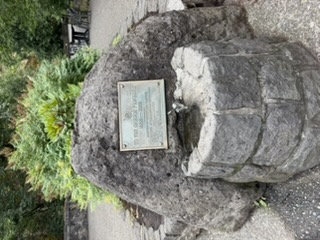
We found a historical marker!
Toward Mt. Hood
After gazing at the falls, we are off to Mt. Hood. On the “back side” of the mountain, we drove through lavender fields, cherry orchards, cideries, wineries — a dream trip!
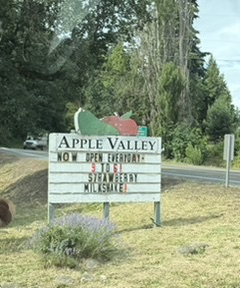
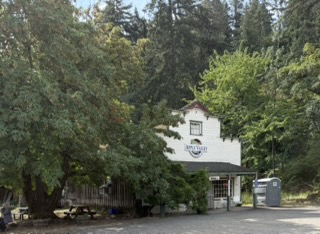
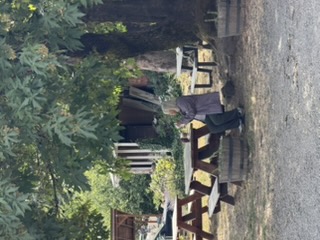
First stop, Apple Valley Market. Locally made jams, jellies, frozen pies to take away, aprons, candles — you get the picture. Keith and I bought strawberry-rhubarb hand pies and I got a cup of freshly brewed coffee. Sitting outside at the market, we left some crumbs for the birds — but not much else 😁
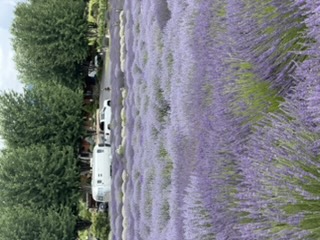
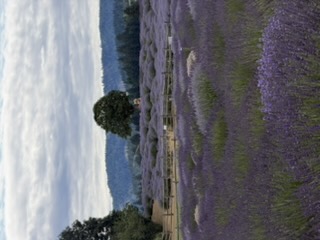
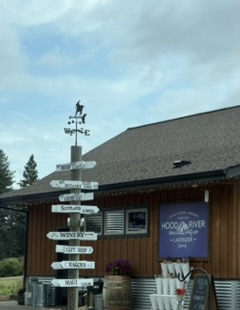
Next stop — Hood River Lavender Farm. Oh the fragrance! I walked away with some bug repellant (lavender scented), foam hand soap (lavender scented), and a sample of bubble bath (lavender scented). I walked around and just enjoyed the fragrance. They have chairs placed among the rows of lavender where one could sit and just smell. They are locally owned and operated and have been in business since 2003.
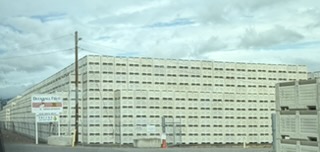
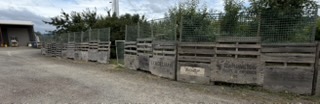
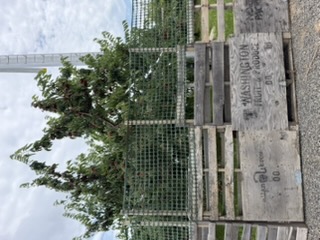
On the way to our next stop, we saw a huge pile of fruit bins. Duckwall Fruit began in 1919 (the year my dad was born!), when the Duckwall brothers, John and William St. Clair, shipped apples from Hood River, Oregon to Indianapolis, IN. Returns were better than that of neighboring growers who asked to be included in the following year’s shipment. Because of that initial success, the first office was established in 1926. To increase the distribution and improve sales profits of fruit, John traveled to Europe in 1929 to establish export markets that have grown to about one third of the company’s total volume. In 1971, the company grew dramatically with the merger of Duckwall Fruit and Pooley Fruit Company, and the current corporate name, Duckwall Fruit, simplified the company’s identification.
They currently package over 2.225 million cartons of pears that are grown by over 70 growers on 115 separate farms.
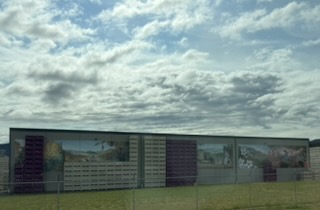
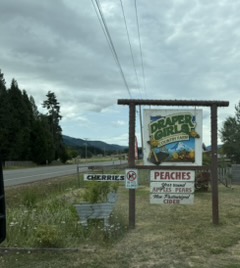
We scored big at Draper Girls Country Farm. Shelley and Bryce are going to get a couple of gourmet items.
We tasted ciders and bought strawberry-rhubarb and tart cherry growlers. So good! We also found gourmet cheese to snack on.
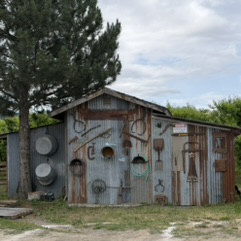
I love the outdoor decor on their shed in the back and how they used old fruit crate sides to shore up their wooden fencing around the cherry trees.
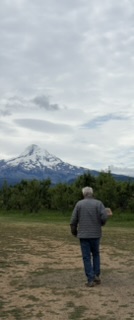
The last picture is of Keith walking to the trailer. That’s Mt. Hood in the background!
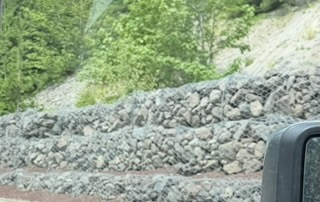
Driving along, I saw a good use of rocks again, shoring up the sides to keep random rockslides from entering the highway.
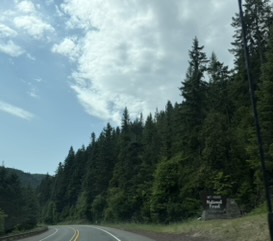
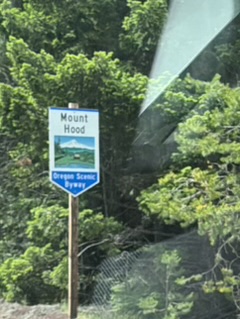
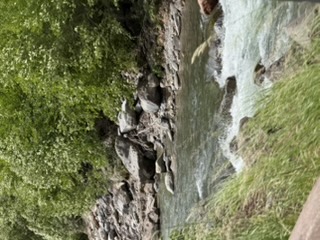
Finally we entered Mt. Hood National Forest. Along the highway there were creeks and streams.
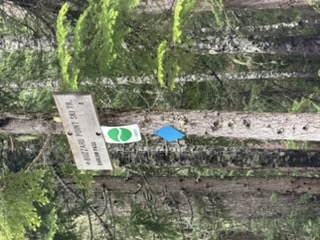
Barlow Road
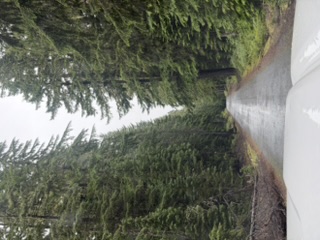
Keith had a spot marked in the Auto Tour Guide — the grave of “an unknown pioneer woman.” That’s all well and good until you find yourself along a two-lane road in the forest with no idea where you and your 25-ft trailer will be able to turn around… 😏
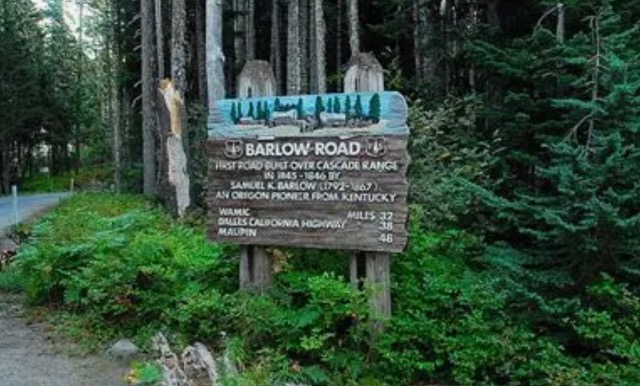
We found Barlow Road.
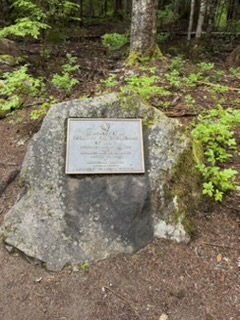
The plaque on the above right reads:
“In memory of an unknown pioneer woman of 184?
Dedicated August 23, 1936 and replaced and rededicated August 23, 1943 by Multnomah chapter national society Daughters of the American Revolution.”
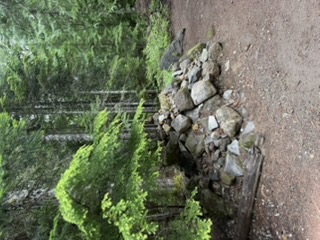
In 1924, highway construction crews accidentally disinterred human remains in a wagon box. They reburied them and built a rock cairn over the grave. Photo one below. Note: I added a small rock to the cairn. Someone else had laid flowers on it.
The Barlow Road was a long-used Native trail which became a wagon road in 1845. It provided travelers on the Oregon Trail an alternative to navigating passage on the Columbia River to the Willamette Valley.
Women traveling west: Traveling on the Oregon Trail was a family migration. Some women chose to go west, but many came over because their fathers, brothers, or husbands decided for them. In 1853, Agatha Stewart Knight and her husband Joel migrated with their seven children. She was eight months pregnant when they traveled along the Barlow Road. She recorded her impressions, as many did, in her diary.
“Traveled 14 miles over the worse road that was ever made up and down very steep rough and rocky hills, through mud holes, twisting and winding round stumps, logs, and fallen trees, now we are on the end of a log, now bounce down in a mud hole, now over a big root of a tree, or rock.”
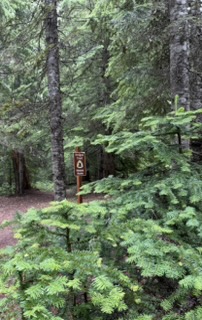
Trillium Lake
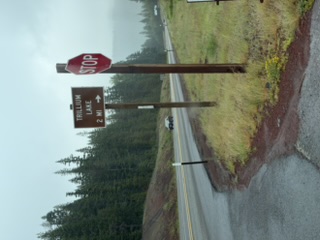
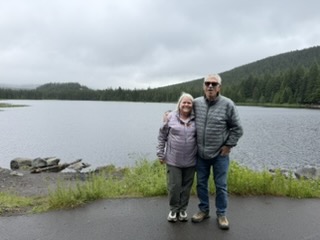
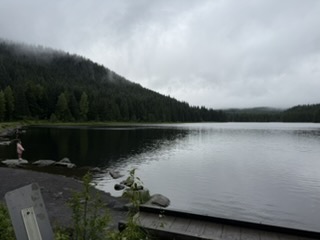
We still needed to kill some time as we were not “allowed” to check in at the next camping site. The advance team needed to get the registration information and instructions straight in order to tell us as we arrived. So, we saw a turn to go to Trillium Lake. In the parking lot before the entry, we met up with another Airstream couple. All four of us decided to drive to the day area of the lake and walk about, stay for lunch. One of the lovely things about traveling with your little house on wheels — lunch is in the fridge, along with fresh fruit and cold drinks. And you have a nice, clean bathroom!
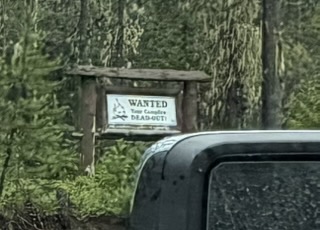
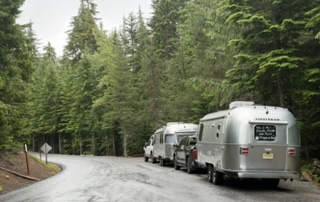
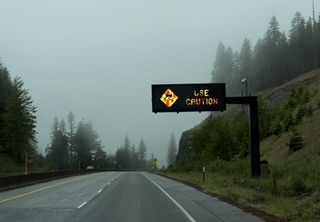
Timing was right to move on and we descended a 6% grade to get where we were going.
Forest Therapy
Also known as Shinrin-yoku or “forest bathing,” forest therapy is a Japanese practice of spending time mindfully in nature — especially among trees — to promote healing and mental well-being. It’s not exercise or hiking. It’s simply being present in the natural world.